

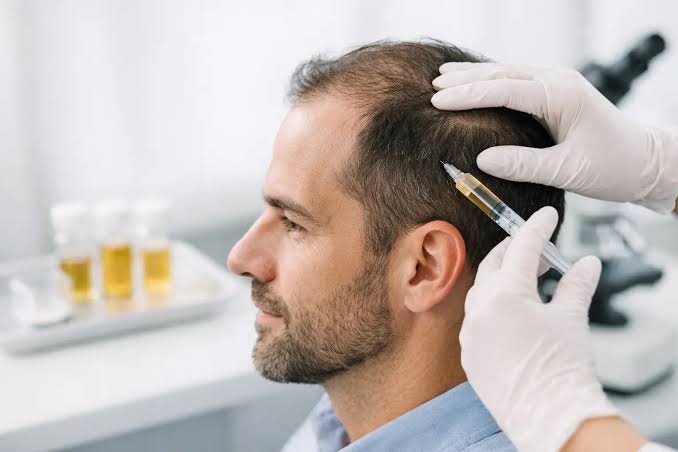
Professional hair loss treatments are shifting toward regenerative solutions because many specialists now view thinning hair as a long-term follicle health issue instead of only a cosmetic concern. Modern solutions, such as CALECIM® Professional, prioritize scalp health, follicle signaling, and inflammation control before follicles become severely miniaturized or inactive.
This change is happening as more people seek non-surgical options that fit into long-term maintenance routines. Androgenetic alopecia is characterized by progressive follicle miniaturization and fewer active follicles, which helps explain why many newer treatment strategies focus on preserving follicle function earlier.
According to Frontiers in Pharmacology, androgenetic alopecia affects up to 80% of men and nearly 50% of women by age 70. As awareness grows, so does interest in regenerative scalp-focused care.
Professional hair loss treatments are shifting toward regenerative solutions because many specialists now view hair thinning as a long-term follicle health issue rather than only a cosmetic or hormonal problem
Hair specialists increasingly focus on scalp biology, follicle signaling, and long-term maintenance because hair thinning often develops gradually over the years. Treatments are no longer viewed only as ways to slow shedding temporarily.
Why maintaining follicle activity has become a bigger priority than simply slowing shedding
Healthy hair growth depends on maintaining normal follicle cycling over time. Hair follicles continuously cycle through active growth, transition, and resting phases.
Many professionals now aim to support follicles before long-term inactivity develops because severely miniaturized follicles may become harder to stimulate later.
Many older hair loss treatments were designed around symptom control rather than scalp regeneration
Older hair loss treatments often focused on slowing shedding or improving visible appearance rather than supporting the biological environment around follicles.
Why some treatments improve appearance without improving follicle resilience
Some products temporarily improve the appearance of fullness through coating, thickening, or cosmetic effects without addressing follicle signaling or scalp condition.
That does not mean these treatments are ineffective. However, visible improvement and healthier follicle cycling are not always the same thing.
Regenerative hair solutions focus on the scalp environment surrounding the follicle instead of targeting only the hair strand itself
Regenerative hair therapies aim to support the biological environment around follicles through signaling pathways, inflammation management, and scalp-focused support.
How growth factors and exosomes influence follicle communication
A PubMed-indexed review reports that stem cell-derived exosome therapies may influence dermal papilla cell activity, angiogenesis, and inflammatory pathways involved in hair growth.
Researchers continue studying how exosomes and growth factors may affect communication between cells involved in follicle cycling and repair.
CALECIM® Professional’s PTT-6® contains stem cell-derived growth factors, exosomes, and proteins intended to support follicle signaling and scalp health.
Why inflammation and microstress around follicles can gradually reduce density
Inflammatory signaling may influence long-term follicle health. Chronic microinflammation around follicles may contribute to progressive thinning and follicle miniaturization.
Hair specialists are paying closer attention to dormant follicles because inactivity can happen long before visible baldness appears
Hair thinning often begins before obvious bald spots develop, which is why earlier intervention has become more common.
Why earlier support may matter more than aggressive late-stage intervention
Severely miniaturized follicles may respond differently from follicles that are still biologically active. Earlier support may allow more opportunity to maintain follicle activity before significant loss develops.
The rise of clinic-grade at-home treatment reflects a larger shift toward continuous scalp maintenance between professional visits
More consumers now want hair restoration options that fit into home routines between clinic visits.
How at-home regenerative systems attempt to extend professional treatment strategies
Some systems combine scalp stimulation, regenerative serums, and maintenance schedules to mimic aspects of professional treatment plans.
CALECIM® Professional Hair Serum is designed as a 6-week scalp restoration system containing PTT-6® and a scalp-prep activator.
The company also reports:
- 16% increase in hair width
- 14% increase in hair count
- 15% increase in active follicles per square centimeter
Why consistency may matter more than intensity for some users
Hair restoration often requires ongoing maintenance because follicles continuously cycle through active and resting phases.
For some users, consistent long-term scalp care may be more realistic and sustainable than aggressive procedural schedules.
More patients are looking for regenerative hair solutions because they want options that feel lower commitment, less invasive, and easier to sustain long-term.
Many people want alternatives that fit daily life more comfortably than surgery or indefinite medication use.
Why some users hesitate to rely on medication indefinitely
Adherence to long-term hair loss medications may decline because of inconvenience, expectations, cost, and side-effect concerns.
This does not mean medications are ineffective. However, it helps explain why interest in regenerative scalp-focused support continues growing.
Why non-surgical approaches are gaining interest earlier in the hair loss journey
Some people now explore regenerative support before thinning becomes advanced enough for surgical intervention.
This shift reflects growing interest in maintenance-focused care instead of waiting until visible loss becomes severe.
Regenerative hair therapy may produce the best results when follicles are still biologically capable of responding to repair signaling
Regenerative treatments may work differently depending on the stage of follicle miniaturization and scalp condition.
Why severe follicle miniaturization changes treatment expectations
Advanced follicle inactivity may reduce responsiveness to certain therapies. Earlier-stage thinning may offer more opportunity to preserve or support existing follicle activity.
What realistic improvement may look like within the first few months
Realistic outcomes may include:
- reduced shedding
- thicker-looking hair
- improved density appearance
- slower progression
CALECIM® Professional in-vitro testing found a 24% increase in follicle cell production and a 30x reduction in inflammatory cues associated with PTT-6® exposure.
How to evaluate whether regenerative hair therapy may fit your stage of hair thinning
Regenerative scalp-focused care may fit people looking for earlier, non-surgical support or long-term maintenance strategies.
| May Be Best For | May Be Less Suitable For |
| Early-to-moderate thinning | Completely inactive follicles |
| People wanting non-surgical options | Those expecting instant regrowth |
| Maintenance-focused users | Users unwilling to maintain routines |
| Combination therapy users | Advanced untreated scarring alopecia |
When professional evaluation becomes especially important
Identifying the cause of hair loss is essential because different types of thinning require different approaches.
Professional evaluation becomes especially important if shedding is sudden, patchy, inflammatory, or rapidly worsening.
FAQ
Are regenerative hair solutions the same as stem cell hair therapy?
Not always. Some regenerative therapies use growth factors, exosomes, or signaling molecules derived from stem cell research rather than live stem cells themselves.
How long do regenerative hair treatments usually take to show visible improvement?
Timelines vary, but many regenerative approaches are evaluated over several weeks to months because hair growth cycles are gradual.
Can regenerative therapies replace hair transplants for some people?
For some individuals, regenerative approaches may help delay or complement transplant planning. They are not guaranteed replacements for surgery.
Are regenerative hair treatments safer than long-term medication use?
Safety depends on the treatment type, medical history, and protocol. More long-term research is still developing for several regenerative therapies.
Do regenerative scalp treatments work differently for men and women?
Hair thinning patterns and contributing factors may differ between men and women, so treatment approaches are often individualized.
Can clinic-grade at-home treatment systems support long-term maintenance?
Some users incorporate clinic-grade at-home treatment into long-term scalp maintenance routines between professional visits.
Conclusion
Regenerative hair solutions are becoming a larger part of professional treatment because many specialists now recognize that long-term hair quality depends on more than simply slowing shedding or masking thinning. Modern approaches increasingly focus on supporting follicle signaling, scalp health, inflammation management, and long-term follicle activity before severe miniaturization develops.
This shift is also changing how people approach hair restoration overall. Instead of waiting until thinning becomes advanced enough for surgery, more consumers are exploring earlier and less invasive maintenance-focused options. Professional treatment plans increasingly combine regenerative scalp care, microneedling, and clinic-grade at-home treatment strategies to support healthier hair cycles over time.
For people interested in non-surgical scalp-focused care, stem cell hair growth solutions such as CALECIM® Professional Hair Serum may offer another maintenance-oriented option worth discussing with a qualified professional.
